A Few Updates
Published on: October 3, 2026
I left my job, started a small company, made two apps and started a third. Here is what changed this year.
This was a busy year, and I did not write here much. So here is a short update.
Leaving Netta Tech
In April I left Netta Tech after three years. I was the backend lead there. I worked mostly on workflow systems and big third-party integrations. I learned a lot there, and I am thankful for that time.
I left because I wanted to make my own products, from start to finish.
Mikoriza Network
In May I started Mikoriza Network. It is a small, independent technology company. The idea is simple: make small, reliable software that does one thing well.
When you run a company alone, the job is more than code. I also do the servers, the releases, the app store reviews, the payments and sometimes tax forms. I like some of it. Some of it I am still learning.
Two Apps
Two apps are out now. Both follow the same rule: keep it small, and make every part feel right.
palilili
palilili is a to-do app with three lists: now, later and done. You swipe a task from one list to another. If a task stays in “later”, it comes back to “now” the next day. So you do not forget it.
It works offline. There are no accounts, no ads and no tracking. I do not run any servers for it. Your tasks stay on your phone. You can sync them with your watch if you want. It also has reminders and daily tasks. That is all, and that is on purpose.
The name comes from Toki Pona. It means something like “small, quiet things to do”. While I built it, I kept one idea in mind: a to-do list should not become one more thing to do.
It is on iOS and Android.
Sona
Sona is a flashcard app. It helps you remember things for a long time. I wanted it to be as simple as Quizlet and as strong as Anki.
It uses FSRS (Free Spaced Repetition Scheduler). The app decides which cards you should study and when. You do not need to think about it. There are also eight quiz types, like multiple choice, writing, listening and building sentences. So studying does not get boring.
Some other things I like:
- Offline study. It works without internet. It syncs when you are online again.
- Copy a deck. You can copy a public deck and change it for yourself.
- AI cards. You can make cards from a topic, a PDF, an image, a document or up to one hour of audio.
Sona works on the web, iOS and Android. It is free for most people. There is also a Pro plan for bigger decks and AI cards.
Stopping Vivosig
Some of you may remember Vivosig, the uptime monitoring tool I wrote about before. I decided to stop it. It was not a bad idea, but I did not have enough time for it next to the other apps. Stopping was the honest choice.
But the problem it tried to solve is still there. I just found a better way to look at it.
What I Am Building Now: probablyalive
My third product is probablyalive. It watches devices and tells you when one stops working. Think of sensors, kiosks, gateways or small Linux computers that run somewhere far away.
The idea is simple. Every device sends a small message, a “heartbeat”, every few minutes. If the heartbeats keep coming, the device is probably alive. If they stop for too long, you get an alert.
The hard part is sending the right alerts. A short network problem should not wake you up at night. If a hundred devices go down at the same time, you should get one alert, not a hundred. And when you are doing maintenance, it should stay quiet.
Devices can also send a few small numbers, like battery level, signal strength, firmware version and why they last restarted. This often tells you the problem before you send someone to fix it.
It is for small and medium teams with a few dozen to a few thousand devices. There will also be a free plan for hobbyists. Many good hardware projects start on a desk with an ESP32 and Home Assistant.
I am building it with Scala, PostgreSQL and TimescaleDB, and a small Go program for Linux devices. I will write more about it before the launch.
Finally, Scala in a Real Product
I have been interested in Scala for a long time. I wrote it, read about it and played with it on the side. But I never used it for a real product of my own. With probablyalive, that finally changes.
What pushed me was the VirtusLab Scala Stack (VSS). It is a set of open source libraries for Scala 3 that fit well together. Its idea is “direct style” Scala: you write normal, step by step code, without wrapping everything in futures or effect systems. Java’s virtual threads do the hard work under it, so it is still fast.
Before VSS, I always had to pick between many libraries and styles, and that made it hard to start. VSS gave me a clear path. For probablyalive I use a few parts of it:
- Tapir for the HTTP API. I write the API once and get the server and the docs from it.
- Ox for concurrency. Many small tasks can run at the same time, and the code still reads from top to bottom.
- Parlance to talk to the database.
The type system catches many mistakes before the code even runs. For a service that must not miss an alert, this matters a lot.
I plan to write more about this stack here as the project grows.
Still Studying
I am still doing my MS in Computer Science at the University of Colorado Boulder. I am on the data structures and algorithms path. My posts about Bloom filters, tries and hashed time wheels came from these classes. I want to write more posts like them.
Away From Work: Death Stranding
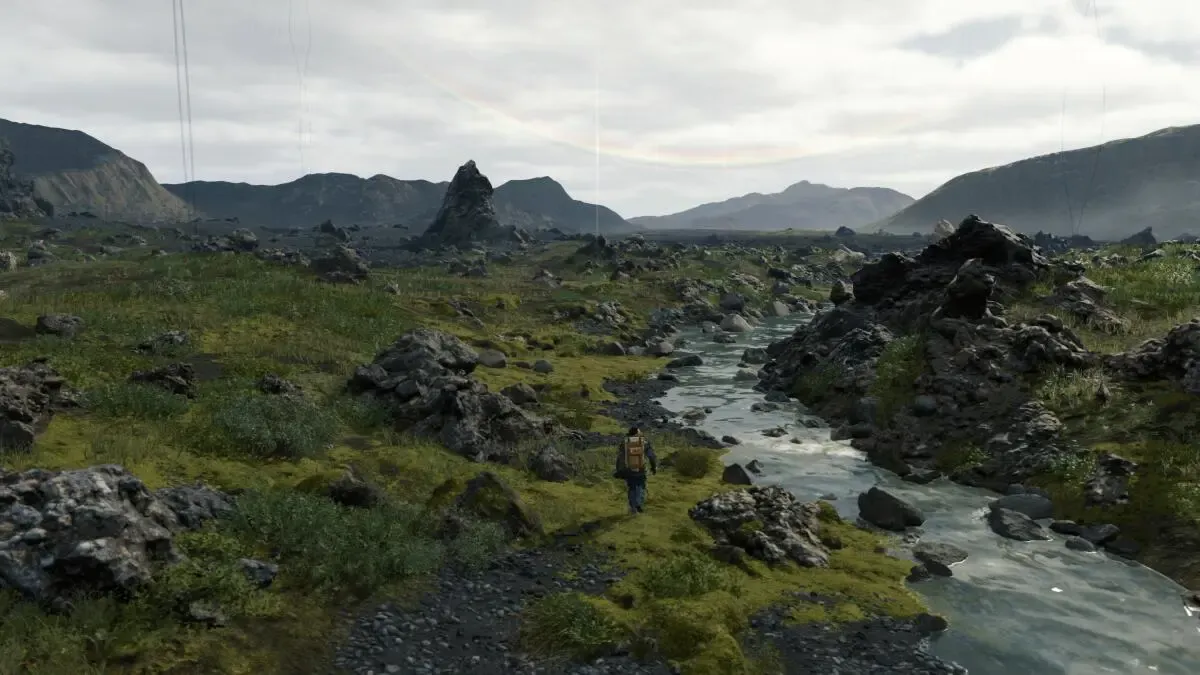
In my free time I play Death Stranding. In the game, you carry packages from one place to another. It sounds boring, but for me it is one of the most relaxing games I have played.
Most of the time you just walk. You plan your way, pick up your packages and go over hills and rivers. Then, at the right moment, the music starts. With good music, just going from one place to another feels really nice.
But it is not always calm. Sometimes the weather gets bad, the road gets hard, or something waits for you on the way. Then it gets tense very fast. I really like this mix. Long, quiet walks, and then short moments where you must be careful. When you finally arrive, you feel you earned it.
The online part is nice too. You never meet other players, but you find the ladders, ropes and bridges they left. They find yours too. Small, useful things from strangers that make your trip a little easier. I like that a lot.
Reading: Dune
I am also reading the Dune series by Frank Herbert. Right now I am on the third book, Children of Dune.
The first book is a big adventure. The next books are slower and darker. They are less about winning and more about what power does to people, and about what happens when you can see the future but cannot escape it. I did not expect this, but I like it.
The world is huge, and Herbert does not explain everything. You have to pay attention, and sometimes read a page twice. But that is part of the fun. After a long day of code, getting lost on Arrakis for an hour is a good way to rest.
That Is All For Now
To follow what I am doing, you can check my now page. You can also follow the RSS feed for new posts. You can find ways to reach me on the about page.
Thanks for reading.